
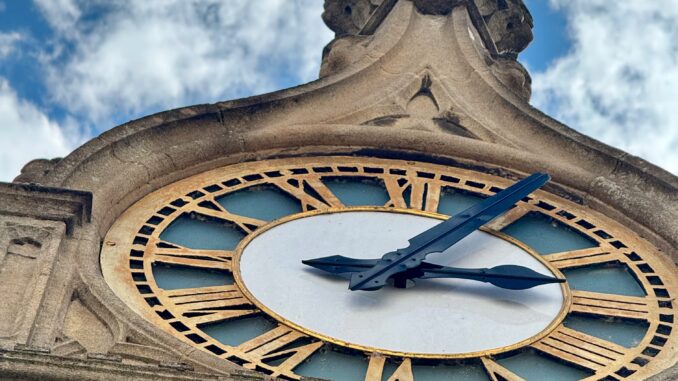
When the clocks go back, the change can seem quite routine. An hour is moved, the daylight is rearranged, and suddenly the evenings feel different. The sun is lower and shadows lengthen. The change in light can feel a little unsettling at first. Things can look quite different depending on where the light falls. In bright, even light, some details are lost; light and shade together reveal more of the contours.
In Genesis we encounter the separation of light and darkness and through Scripture the story of faith continues. Light can mean life, understanding and hope. Darkness speaks of struggle, suffering and uncertainty. Yet it also speaks of the mystery of God’s presence, which is at times beyond our knowing. Moses encounters God in the thick darkness on the mountain. The psalmist knows that even the darkness is not dark to God. And then there is the language of shadow. We know the familiar words of Psalm 23: the valley of the shadow of death. It is an image of sorrow and vulnerability but God walks alongside us through it. Elsewhere, the psalms speak of finding refuge under the shadow of God’s wings, and, in the words of the King James Version, of shelter in the shadow of the Almighty.
That kind of connects with this time of year, as the liturgical calendar takes us on a pilgrimage of remembering, marking and giving thanks. Memory and remembering are multi-dimensional. The passing of time also changes memories, just as the changing light can sometimes bring some things into focus while others remain unseen. As St Paul puts it, we see “through a glass, darkly”. We may not see the whole picture in this life. All of it rests within the mystery of God’s knowing. On the feast of All Saints, we remember not only the named saints, but also those who have quietly lived in faith through the ages. Their lives were not without difficulty or contradiction. They were not people who lived in a permanent brightness, untouched by doubt or disappointment. They lived their faith amid their life circumstances, sometimes with courage, sometimes with uncertainty. Their witness is not that life can be made free of struggle, but that God is present in the midst of it.
As we come towards Advent, the season begins not with the immediate brightness, but with a world waiting, longing for justice and peace and for God to make all things new. The prophets speak of people walking in darkness who have seen a great light. John’s Gospel tells us that the light shines in the darkness and the darkness has not overcome it. The clocks have gone back, and the days will continue to shorten for a while yet. We will become accustomed to the earlier darkness, as we do each year. But the light has not gone; it falls differently now, revealing familiar things in a new way. As Advent approaches, we look towards the coming of Christ, the light of the world, born into the world as it is, with all its beauty and brokenness. And in the midst of all that life holds, we are reminded of the words of 1 John: “Behold what manner of love the Father has given unto us, that we should be called the children of God” (1 John 3:1). For the light that comes into the world is the light of a love that holds us, through every season.